

By Dr Muhammad Zeeshan Afzal, MBBS | FCPS | MRCP
An Allhealthstore.com Editorial Guide
The 7 best magnesium supplements at a glance
- Welzo Ultra Purity Magnesium Threonate 2000mg — Best overall magnesium supplement (and the only highly bioavailable L-threonate form on this list)
- Double Wood Supplements Magnesium Glycinate — Best magnesium glycinate for sleep, mood, and anxiety support
- NOW Foods Magnesium Glycinate (180 Tablets) — Best heritage-value magnesium glycinate
- Swanson Triple Magnesium Complex 400mg (300 Capsules) — Best multi-form magnesium complex value
- NOW Foods Magnesium Citrate Pure Powder (227g) — Best magnesium citrate for digestive support
- Swanson Magnesium Taurate 100mg (120 Tablets) — Best magnesium taurate for cardiovascular wellness
- BetterYou Magnesium Sleep Body Spray (100ml) — Best topical magnesium for sleep support
A clinical note before you read this guide
Magnesium is one of the most essential — and one of the most under-supplied — minerals in modern adult diets. It is involved in over 300 enzymatic reactions in the human body, plays critical roles in muscle and nerve function, blood pressure regulation, blood sugar control, energy production, and bone development, and supports healthy sleep, mood, and cognitive function. And yet, modern dietary surveys consistently show that a substantial proportion of adults in the UK and globally don't reach recommended magnesium intake levels — making magnesium one of the most clinically relevant nutrient supplementation conversations.
This guide is the comprehensive resource I wish existed when patients first ask me about magnesium in clinic. It covers what magnesium actually is and why it matters, the meaningful differences between magnesium forms (this is where most popular guides handle things poorly), the top 7 magnesium supplements available for UK readers in 2026, dosing protocols, safety considerations, and how to choose the right form for your specific wellness goals.
I have no commercial affiliation with any of the brands reviewed in this guide.
What this guide is. A clinician-authored review of the seven best magnesium supplements available in 2026, organised by magnesium form and primary use case, with a comprehensive review of the science behind magnesium supplementation and the practical safety considerations every reader should understand.
What this guide is not. A substitute for personalised medical advice. Magnesium supplementation is generally well-tolerated for most adults, but specific contraindications and clinical situations exist. If you are pregnant or breastfeeding, taking prescription medication (particularly diuretics, certain antibiotics, or bisphosphonates), have kidney disease, or are managing any chronic medical condition, please discuss with your healthcare professional before starting any new supplement.
Why magnesium matters: the basics every adult should understand
Before discussing the best supplements, here's the clinical context that explains why magnesium has become one of the most-recommended supplements globally — and why getting the form and dose right actually matters.
What is magnesium?
Magnesium is the fourth most abundant mineral in the human body and the second most abundant intracellular cation after potassium. The average adult body contains approximately 25 grams of magnesium total — roughly 60% of which is stored in bones, with the remaining 40% distributed across muscle, soft tissues, and bodily fluids.
Magnesium serves as a cofactor for over 300 enzymatic reactions in the body, including reactions involved in:
- Energy production (ATP synthesis — magnesium is required to make ATP biologically active)
- Protein synthesis (involved in DNA and RNA synthesis)
- Muscle function (including the relaxation phase of muscle contraction)
- Nervous system regulation (affecting neurotransmitter release and receptor sensitivity)
- Blood glucose control (involved in insulin signalling)
- Blood pressure regulation (affecting vascular smooth muscle tone)
- Bone development and integrity (working alongside calcium and vitamin D)
- Heart rhythm (supporting normal cardiac electrical conductivity)
This breadth of involvement is part of why magnesium deficiency can produce such varied symptoms — fatigue, muscle cramps, sleep disturbance, anxiety, headaches, and poor recovery from training all have plausible magnesium-related contributions.
Why are so many adults magnesium-insufficient?
This is the conversation that often surprises patients. Multiple factors contribute to widespread magnesium insufficiency in modern adult populations:
1. Soil depletion. Modern intensive agriculture has reduced soil mineral content over generations — meaning even healthy plant foods contain less magnesium than they did 50-100 years ago.
2. Dietary pattern shifts. Processed foods are typically magnesium-depleted, while traditionally magnesium-rich foods (dark leafy greens, nuts, seeds, legumes, whole grains) are under-consumed in modern Western diets.
3. Increased magnesium demands. Stress, intense exercise, alcohol consumption, caffeine, and certain medications all increase magnesium turnover or excretion.
4. Absorption challenges. Various factors including certain medications, gut conditions, and ageing can reduce magnesium absorption.
The practical result: mild-to-moderate magnesium insufficiency is common in adults, and supplemental magnesium is one of the more clinically useful nutrient supplementation interventions available.
Common signs of low magnesium status
Symptoms that can suggest magnesium insufficiency include:
- Muscle cramps, twitches, or restless legs (particularly at night)
- Difficulty falling or staying asleep
- Persistent low-grade anxiety or feeling on edge
- Tension headaches or migraines
- Fatigue not relieved by sleep
- Heart palpitations (in more pronounced deficiency)
- Constipation
- Mood instability or low mood
These symptoms are non-specific (many other things cause them), so they're not diagnostic — but for adults experiencing several of them, magnesium supplementation is one of the most low-risk, high-evidence-base interventions to consider.
For users wanting objective measurement, the Welzo Magnesium Blood Test provides a convenient home testing option for measuring serum magnesium levels.
Why magnesium form matters: the most important section in this guide
This is the section that determines whether your magnesium supplement will actually work for your specific goal. Most popular magnesium guides skip over this — and it's the single most important practical decision you'll make.
Magnesium supplements come in many different chemical forms, and these forms have meaningfully different absorption rates, tissue distribution patterns, and primary use cases. The "best" magnesium for sleep is different from the best magnesium for digestion, which is different from the best magnesium for cognitive performance.
Here's a clinical breakdown of the major forms.
Magnesium L-Threonate (the brain form)
What it is: Magnesium bound to L-threonic acid — a specialised form designed for enhanced blood-brain barrier penetration.
Best for: Cognitive performance, memory, focus, mental clarity, sleep quality, neurological wellness.
Why it's special: Most magnesium forms struggle to cross the blood-brain barrier efficiently. Magnesium L-threonate was specifically developed to address this — research suggests it crosses the blood-brain barrier more effectively than other magnesium forms, raising brain magnesium concentrations and supporting cognitive function specifically.
Trade-off: Premium pricing reflects the specialised formulation. Lower elemental magnesium per gram than some other forms (so it's not the most efficient choice if you just want general magnesium replenishment).
Featured in this guide: The Welzo Ultra Purity Magnesium Threonate 2000mg (#1 pick).
Magnesium Glycinate (the calm form)
What it is: Magnesium bound to the amino acid glycine — one of the body's natural calming neurotransmitters.
Best for: Sleep, mood, anxiety support, muscle relaxation, gentle daily replenishment.
Why it's preferred: Highly bioavailable, very well-tolerated even at higher doses, and the glycine partner amino acid has its own calming effects on the nervous system. Magnesium glycinate is one of the most-recommended forms for users with stress, anxiety, or sleep issues.
Trade-off: Slightly lower elemental magnesium per gram than oxide or citrate forms (you may need slightly higher capsule doses to hit specific elemental magnesium targets).
Featured in this guide: Double Wood Magnesium Glycinate and NOW Foods Magnesium Glycinate.
Magnesium Citrate (the digestive form)
What it is: Magnesium bound to citric acid.
Best for: Constipation relief, digestive support, general magnesium replenishment.
Why it works for digestion: Magnesium citrate has a notable osmotic effect in the gut — it draws water into the bowel, supporting regular bowel movements. For users with constipation, this is genuinely useful. For users without constipation issues who want general magnesium replenishment, the loose-stool effect can be a downside at higher doses.
Trade-off: Higher doses can cause loose stools or diarrhoea — meaning citrate isn't ideal for users wanting maximum dose without GI effects.
Featured in this guide: NOW Foods Magnesium Citrate Pure Powder.
Magnesium Taurate (the heart form)
What it is: Magnesium bound to the amino acid taurine.
Best for: Cardiovascular wellness, heart rhythm support, blood pressure routines.
Why this combination matters: Taurine itself has cardiovascular research behind it. Combined with magnesium, taurine appears to enhance magnesium's cardiovascular effects while providing its own complementary mechanisms.
Trade-off: Less broad availability than glycinate or citrate. Generally a more focused choice rather than a broad daily replenishment.
Featured in this guide: Swanson Magnesium Taurate.
Magnesium Oxide (the cheap form — mostly avoid)
What it is: Magnesium bound to oxygen.
The reality: Magnesium oxide has high elemental magnesium content per gram on paper, but very low absorption (often estimated at 4-10%). Most of what you take ends up unabsorbed and excreted. This is why magnesium oxide is the cheapest form on the market — and why it's not in any of the top picks in this guide.
When it's reasonable: As an inexpensive osmotic laxative for occasional constipation. For actual nutrient supplementation, choose something else.
Magnesium Malate (the energy form)
What it is: Magnesium bound to malic acid (involved in cellular energy production).
Best for: Fatigue, muscle pain, fibromyalgia-related applications.
Why it's useful: The malic acid partner is involved in the Krebs cycle (the body's primary cellular energy production pathway), making this form of theoretical interest for users prioritising daytime energy and muscle function.
Magnesium Bisglycinate / Buffered Bisglycinate (gentle high-dose option)
What it is: Magnesium with two glycine molecules attached.
Best for: Higher-dose protocols (300-600mg+ daily) where GI tolerance matters.
Why it's useful: Better tolerated at high doses than citrate or oxide. Often used by athletes with high magnesium needs.
Topical Magnesium (transdermal sprays and oils)
What it is: Magnesium chloride or sulfate applied to skin.
Best for: Localised muscle relaxation, sleep support routines, users who can't tolerate oral supplements.
The nuance: Transdermal absorption of magnesium is genuinely debated in the research community. Some studies suggest meaningful skin absorption; others are sceptical. Even if systemic absorption is modest, many users report benefit from the routine itself (massage effect, relaxation cue, skin penetration). For sleep support specifically, the bedtime ritual of applying magnesium spray has both physiological and behavioural value.
Featured in this guide: BetterYou Magnesium Sleep Body Spray.
Multi-form Magnesium Complexes
What it is: Products combining multiple magnesium forms in one capsule.
Best for: Users wanting comprehensive coverage without buying multiple products.
The trade-off: May not deliver the highest dose of any specific form, but provides broader spectrum of benefits.
Featured in this guide: Swanson Triple Magnesium Complex (oxide, citrate, aspartate combination).
How to choose the right magnesium for your goals
Here's the practical decision framework I use with patients:
Primary goal: cognitive performance, memory, mental clarity, brain health → Magnesium L-Threonate (Welzo Ultra Purity Magnesium Threonate 2000mg).
Primary goal: sleep, anxiety, mood, stress → Magnesium Glycinate (Double Wood or NOW Foods).
Primary goal: digestive support, constipation, regularity → Magnesium Citrate (NOW Foods Magnesium Citrate Powder).
Primary goal: cardiovascular wellness, heart rhythm support → Magnesium Taurate (Swanson Magnesium Taurate).
Primary goal: broad spectrum daily wellness → Multi-form complex (Swanson Triple Magnesium Complex).
Primary goal: localised muscle relaxation, bedtime routine → Topical magnesium spray (BetterYou Magnesium Sleep Body Spray).
For most users, starting with magnesium glycinate for general wellness is the safest, most-evidenced choice. Adding magnesium L-threonate for cognitive and sleep applications addresses the brain-specific use case that other forms can't reach as effectively. Some users benefit from running both simultaneously — glycinate during the day for general support, threonate in the evening for cognitive and sleep effects.
How I evaluated these magnesium supplements
Every product in this guide is scored against the same five-point framework.
1. Magnesium form quality
Is the magnesium form clearly labelled and clinically appropriate for the stated use case? Forms with strong bioavailability and specific use-case research score higher.
2. Dose at meaningful levels
Many magnesium products are under-dosed at 100-200mg per serving. Clinical-protocol dosing is typically 200-600mg elemental magnesium daily, depending on application.
3. Formulation purity and transparency
Single-form products with clear labelling are generally preferred over products that obscure individual magnesium amounts in proprietary blends.
4. Manufacturing standards
For a daily supplement category, manufacturing rigour matters. cGMP manufacturing, third-party testing, and brands with established track records score higher.
5. Adherence and value
Magnesium supplementation is typically a multi-month-to-multi-year commitment. Cost-per-month at clinical doses matters more than sticker price.
The 7 best magnesium supplements in 2026
1. Welzo Ultra Purity Magnesium Threonate 2000mg — Best Overall Magnesium Supplement

Verdict: This is the magnesium supplement I now recommend first to my patients.
The Welzo Ultra Purity Magnesium Threonate 2000mg is my top recommendation for 2026. It is a high-strength magnesium L-threonate formulation specifically designed to support cognitive performance, nervous system function, and sleep quality — addressing the specific use cases where magnesium supplementation has the most meaningful impact for modern adults.
Price: £24.99 (RRP £39.99 — a 38% saving)
The complete formulation (per 2-capsule daily serving):
- 2000mg magnesium L-threonate — high-strength targeted formulation
- 30 servings per container (one-month supply)
- GMP-certified manufacturing
- No unnecessary fillers or artificial additives
What I like clinically:
- Magnesium L-threonate form — the brain-targeted magnesium. Magnesium L-threonate is a specialised form known for its ability to cross the blood-brain barrier more effectively than many traditional magnesium compounds. This makes it particularly suitable for individuals seeking targeted support for memory, focus, and overall neurological wellness.
- High-strength 2000mg per daily serving. Substantially higher than many magnesium L-threonate products on the lower end of the market — providing meaningful daily dose for users specifically targeting cognitive and neurological applications.
- Clean-label transparent formulation. No fillers, no binders, no artificial additives. As Welzo's product information explicitly notes: "This formulation is ideal for those looking to support cognitive clarity, relaxation, and long-term brain health without unnecessary additives."
- Multi-system supportive applications. Per Welzo's product information, supports cognitive performance, memory and mental clarity, healthy sleep quality, nervous system regulation, and long-term brain health.
- Welzo Ultra Purity manufacturing standard. GMP-certified facilities with quality, purity, and consistency testing — important for any daily nutrient supplement taken over multi-month periods.
- Strong value pricing. £24.99 standard price (RRP £39.99 — a 38% saving), making sustained long-term use cost-effective for users running multi-month cognitive and sleep support protocols.
Who it's for: Adults specifically prioritising cognitive performance, memory, focus, sleep quality, or nervous system support. Knowledge workers and students wanting brain-targeted magnesium support. Adults experiencing age-related cognitive concerns wanting evidence-led supportive supplementation. Users running comprehensive longevity stacks who want cognitive-targeted nutrient support.
Who it's not for: Users primarily targeting digestive/constipation support (citrate is more appropriate). Users primarily targeting cardiovascular applications (taurate is more appropriate). Users wanting maximum elemental magnesium per dose for general replenishment (glycinate or citrate provide more elemental magnesium per gram). Pregnant or breastfeeding women without specialist input. Users with significant kidney impairment.
My recommendation: Take 2 capsules daily as directed. For sleep and cognitive applications, evening dosing is typically preferred — the relaxation and sleep-supportive effects make this a natural bedtime supplement. Run an honest 8-12 week trial for cognitive endpoints, with subjective tracking of focus, memory, mental clarity, and sleep quality at baseline and at 12 weeks.
2. Double Wood Supplements Magnesium Glycinate — Best for Sleep, Mood, and Anxiety Support
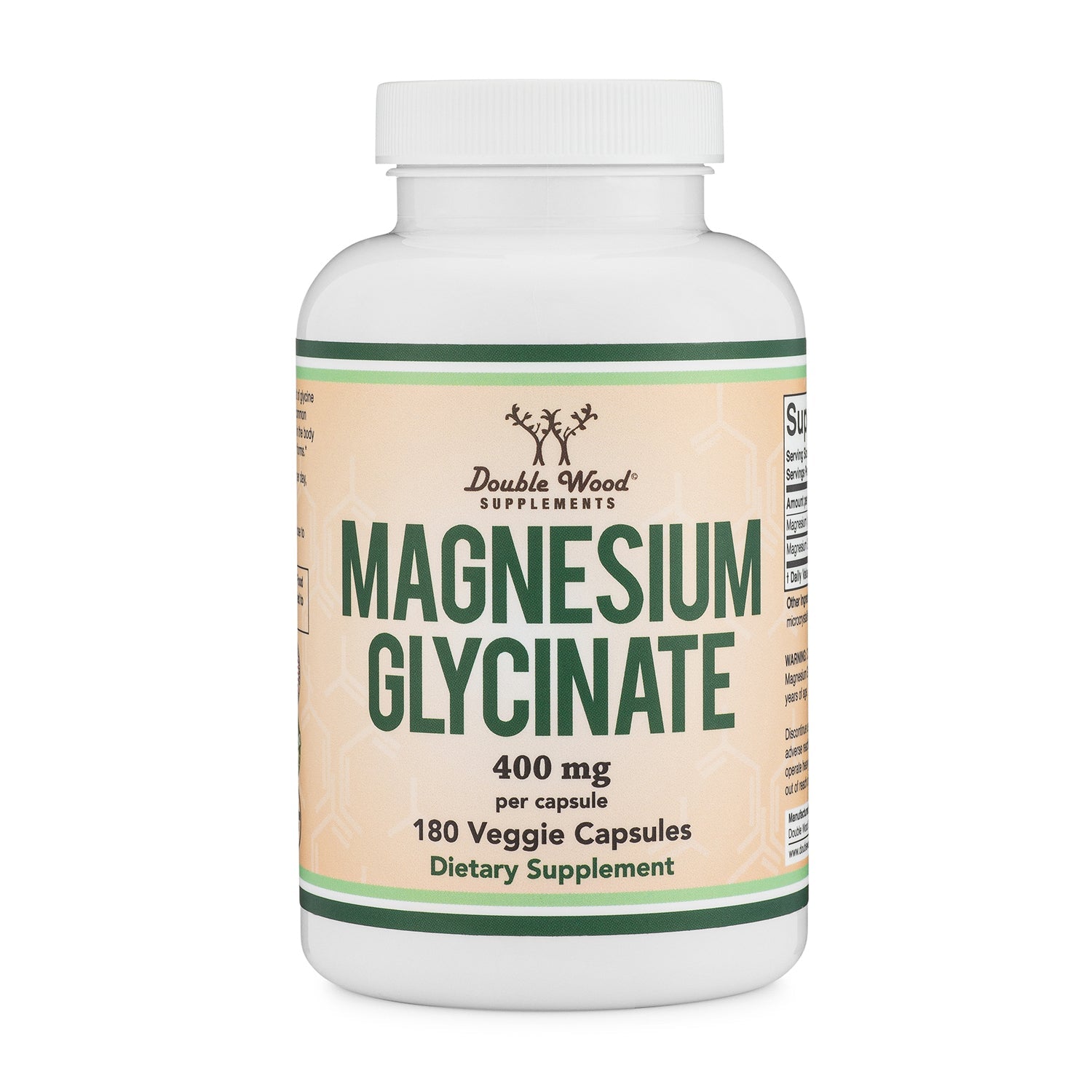
Double Wood Supplements Magnesium Glycinate is the highly bioavailable magnesium glycinate option from Double Wood Supplements — a US brand known for transparent third-party testing on every batch. Magnesium glycinate is one of the most well-tolerated and clinically relevant magnesium forms for users targeting sleep, mood, and anxiety support.
Price: £28.19
What I like clinically:
- Magnesium glycinate form — the calm form. Magnesium bound to glycine, the body's natural calming neurotransmitter. The glycine partner amino acid contributes its own calming effects, making magnesium glycinate particularly suited to bedtime dosing for sleep support.
- Highly bioavailable. Among the best-absorbed magnesium forms — meaningfully more absorbable than oxide or citrate forms.
- Excellent gastrointestinal tolerance. Unlike citrate or oxide, magnesium glycinate doesn't typically cause loose stools at standard doses — making it appropriate for users wanting higher daily doses without GI side effects.
- Double Wood third-party testing. Every batch tested for identity, potency, and contaminants. Transparent quality control standards.
- Single-ingredient transparent formulation. Clean label without unnecessary additives.
Who it's for: Adults with sleep difficulties, anxiety, or mood instability seeking magnesium-based supportive nutrition. Users with high stress levels affecting sleep quality. Users wanting a well-tolerated magnesium form for sustained daily use. Anyone preferring single-ingredient transparent products.
My recommendation: Take with evening meal or 30-60 minutes before bed for sleep applications. Some users prefer split dosing (morning and evening) for daytime mood and stress support.
3. NOW Foods Magnesium Glycinate (180 Tablets) — Best Heritage-Value Magnesium Glycinate
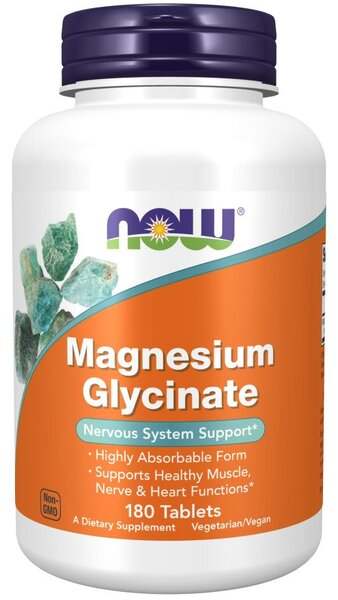
NOW Foods Magnesium Glycinate (180 Tablets) is the heritage-value magnesium glycinate from NOW Foods — one of the most-tested supplement brands in independent third-party reviews, founded in 1968 and consistently identified as a top pick for label accuracy and consistency.
Price: £23.94
What I like clinically:
- Heritage NOW Foods quality. One of the most-tested brands in independent reviews, with strong reputation for label accuracy and consistent manufacturing.
- Magnesium glycinate form. Same well-tolerated, well-absorbed form as the Double Wood option but at heritage-brand value pricing.
- 180-tablet pack for a 3-month supply at typical daily dosing — providing strong cost efficiency for sustained protocols.
- Strong value pricing for a heritage-brand glycinate product.
- Tablet format for users who prefer tablets to capsules.
Who it's for: First-time magnesium glycinate users wanting a heritage-brand option to test the supplement before committing to premium-tier alternatives. Users who already trust NOW Foods from other supplements. Users wanting strong value-per-month at sustained protocol dosing.
The trade-off: Tablet format may be less preferred than capsules for some users. Standard formulation without premium-tier positioning.
4. Swanson Triple Magnesium Complex 400mg (300 Capsules) — Best Multi-Form Magnesium Complex Value
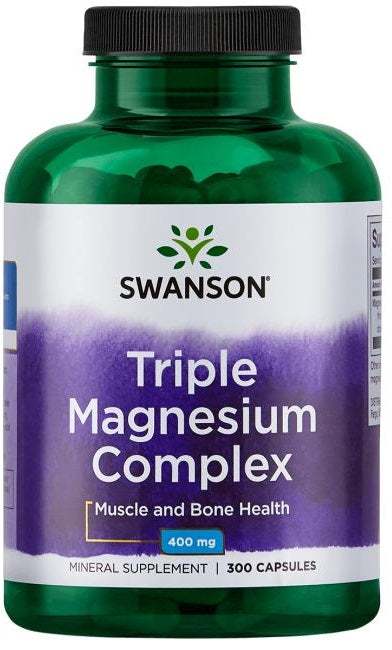
Swanson Triple Magnesium Complex 400mg (300 Capsules) is the multi-form magnesium complex from Swanson — combining three magnesium forms (oxide, citrate, and aspartate) at clinically meaningful 400mg per capsule, in a generous 300-capsule pack.
Price: £13.27
What I like clinically:
- Three magnesium forms in one capsule. Combines oxide (high elemental magnesium content), citrate (digestive support and bioavailability), and aspartate (energy production support) — providing broader spectrum coverage than any single form.
- Clinically meaningful 400mg dose per capsule. Substantial elemental magnesium content per serving.
- Generous 300-capsule pack at exceptional value pricing — making this one of the most cost-effective sustained-protocol options on the market.
- Heritage Swanson brand with strong third-party testing reputation.
- Useful entry point for adults new to magnesium supplementation who want broad spectrum coverage at accessible pricing.
The trade-off: Multi-form blend means individual form doses aren't disclosed (some users prefer single-form transparency). The oxide component contributes to lower overall absorption rate compared to pure glycinate or threonate options.
Who it's for: Users wanting broad-spectrum magnesium support at maximum value. First-time magnesium users wanting an accessible entry point. Users running sustained long-term protocols on a budget.
5. NOW Foods Magnesium Citrate Pure Powder (227g) — Best Magnesium Citrate for Digestive Support

NOW Foods Magnesium Citrate Pure Powder (227g) is the heritage-value magnesium citrate powder from NOW Foods — providing a flexible-dose powder format at strong value pricing for users targeting digestive support, regularity, or general magnesium replenishment.
Price: £13.93
What I like clinically:
- Magnesium citrate form — the digestive form. Well-absorbed, with notable osmotic effects in the gut that support regularity and digestive comfort.
- Powder format provides flexible dose adjustment — from 200mg for general support up to 500mg+ for digestive applications.
- 227g bulk pack provides excellent value-per-gram for sustained protocols.
- Heritage NOW Foods quality with strong third-party testing track record.
- Easy mixing into water, juice, or smoothies.
- Pure powder formulation without capsule excipients.
The trade-off: Powder requires accurate measuring and isn't as convenient as capsules. Higher doses can produce loose stool effects (which is the point for users targeting constipation, but a downside for users wanting maximum dose without GI effects). Needs to be mixed before consumption.
Who it's for: Users with constipation or digestive irregularity wanting magnesium-based supportive nutrition. Users wanting flexible dose adjustment in a powder format. Users running custom protocols requiring higher daily doses. Users wanting maximum cost efficiency at high doses.
My recommendation: Start at a lower dose (200-300mg) and titrate up gradually based on response. Take with food for tolerability. For digestive support specifically, evening dosing typically supports next-morning regularity.
6. Swanson Magnesium Taurate 100mg (120 Tablets) — Best Magnesium Taurate for Cardiovascular Wellness
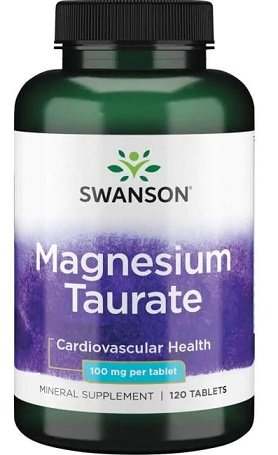
Swanson Magnesium Taurate 100mg (120 Tablets) is the magnesium taurate option from Swanson — pairing magnesium with the amino acid taurine, providing complementary cardiovascular wellness mechanisms in a single supplement.
Price: £15.81
What I like clinically:
- Magnesium taurate form — the heart form. The combination of magnesium and taurine provides complementary cardiovascular wellness mechanisms.
- Taurine partner amino acid. Taurine has its own cardiovascular research base and works synergistically with magnesium for cardiac applications.
- Heritage Swanson brand with strong third-party testing standards.
- Strong value pricing for a specialised cardiovascular-focused magnesium form.
- 120-tablet pack for sustained protocol use.
The trade-off: 100mg per tablet means users may need 2-3 tablets daily to reach typical magnesium doses. Specialist form rather than broad daily replenishment.
Who it's for: Users specifically prioritising cardiovascular wellness through magnesium supplementation. Users with cardiovascular risk factors wanting complementary nutrient support. Users wanting the taurine + magnesium combination in a single product.
Important note: Discuss with your healthcare professional before starting if you have established cardiovascular disease, take blood pressure or heart rhythm medications, or have specific cardiovascular concerns.
7. BetterYou Magnesium Sleep Body Spray (100ml) — Best Topical Magnesium for Sleep Support
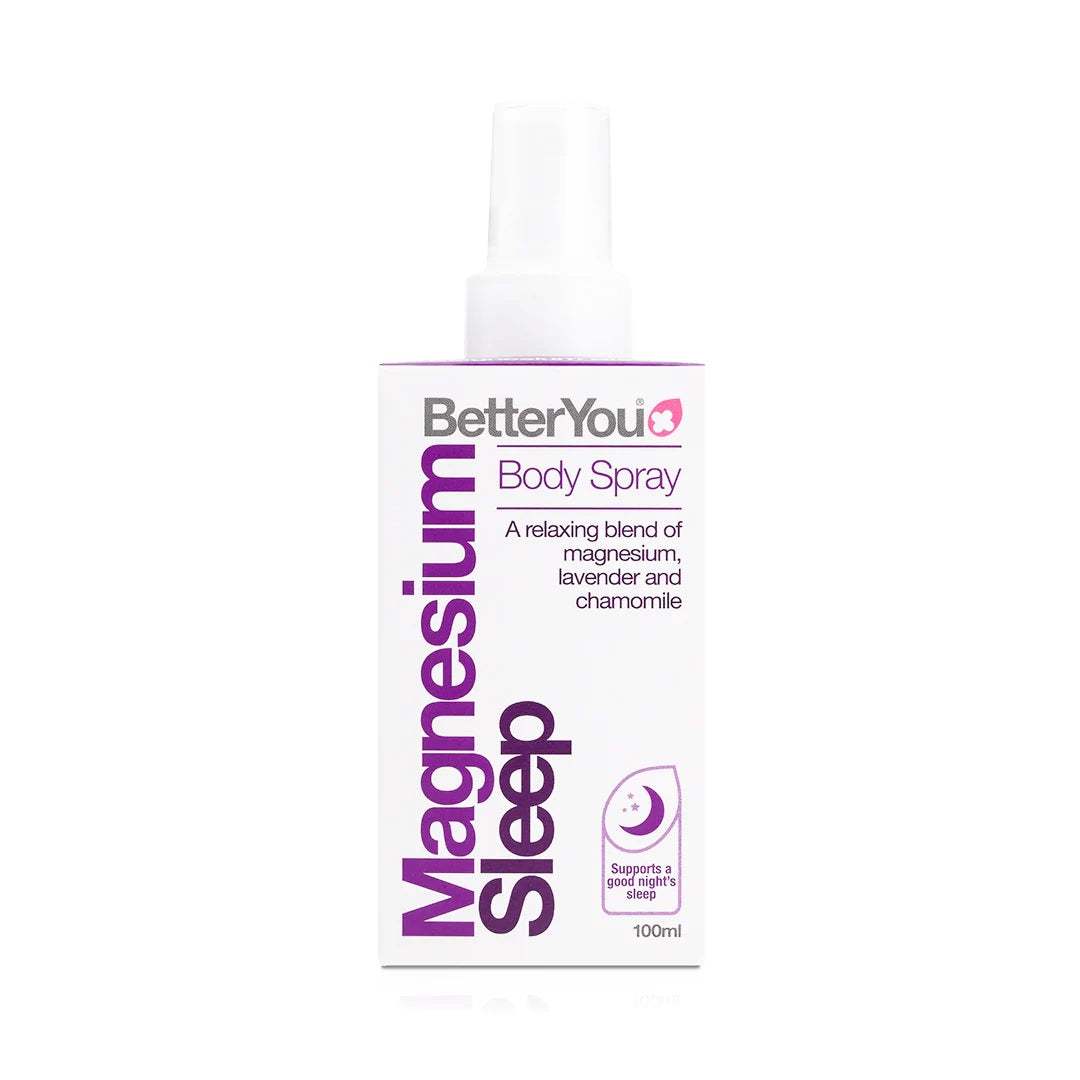
BetterYou Magnesium Sleep Body Spray (100ml) is the heritage UK transdermal magnesium spray from BetterYou — one of the most-recognised UK magnesium specialist brands, with a focused formulation specifically designed for the bedtime routine.
Price: £10.37
What I like clinically:
- Heritage UK brand specialism. BetterYou is one of the most-established UK transdermal magnesium specialists, with consistent customer feedback and strong UK supply chain.
- Sleep-specific formulation. Combines magnesium chloride with calming botanicals (typically including lavender or chamomile) — providing both physiological magnesium delivery and the relaxation cues that support a bedtime routine.
- Convenient spray format for direct application to limbs, neck, or back before bed.
- Suitable for users who can't tolerate oral supplements or want to avoid additional capsules.
- The bedtime ritual itself has value — applying the spray creates a relaxation cue that supports sleep onset, regardless of the systemic absorption debate.
The trade-off: Transdermal absorption of magnesium is genuinely debated in the research community — systemic absorption may be more modest than oral routes. Best framed as a complementary bedtime routine layer rather than a sole magnesium source. Some users experience mild skin tingling on first applications (typically resolves with continued use).
Who it's for: Users wanting a non-oral magnesium option as part of a bedtime routine. Users who have GI sensitivity to oral magnesium supplements. Users wanting a relaxation cue/ritual alongside other interventions. Users with localised muscle tension wanting targeted topical application.
My recommendation: Apply 5-10 sprays to limbs, neck, or back approximately 30 minutes before bed. Pair with oral magnesium glycinate or threonate for users wanting the most comprehensive sleep support.
Comparison: the 7 magnesium supplements at a glance
| Rank | Product | Form | Price | Best For |
|---|---|---|---|---|
| 1 | Welzo Ultra Purity Magnesium Threonate 2000mg | L-Threonate | £24.99 | Best overall — cognitive, sleep, brain |
| 2 | Double Wood Magnesium Glycinate | Glycinate | £28.19 | Sleep, mood, anxiety |
| 3 | NOW Foods Magnesium Glycinate (180 tabs) | Glycinate | £23.94 | Heritage-value glycinate |
| 4 | Swanson Triple Magnesium Complex 400mg | Multi-form blend | £13.27 | Broad spectrum value |
| 5 | NOW Foods Magnesium Citrate Powder (227g) | Citrate | £13.93 | Digestive support |
| 6 | Swanson Magnesium Taurate | Taurate | £15.81 | Cardiovascular wellness |
| 7 | BetterYou Magnesium Sleep Body Spray | Transdermal chloride | £10.37 | Bedtime topical routine |
Building a complete magnesium routine
For most adults, the right approach is not to take all seven products. Instead, build a routine matched to your specific goals and lifestyle.
Tier 1: The foundation
Welzo Ultra Purity Magnesium Threonate 2000mg — the brain-targeted magnesium for cognitive performance, sleep, and nervous system support. Most adults benefit from this as the foundational layer for the modern wellness use cases magnesium addresses.
Tier 2: Goal-specific layering
If your primary additional goal is:
- Sleep, anxiety, and mood support → add Double Wood Magnesium Glycinate for daytime mood support and complementary glycine effects.
- Digestive support and regularity → add NOW Foods Magnesium Citrate Powder at a low starting dose, titrating up.
- Cardiovascular wellness → add Swanson Magnesium Taurate for taurine synergy.
- Bedtime relaxation routine → add BetterYou Magnesium Sleep Body Spray for topical layer.
Tier 3: Budget-conscious alternatives
If you prefer a single-product budget-friendly approach:
- NOW Foods Magnesium Glycinate for sleep/mood at heritage-brand value.
- Swanson Triple Magnesium Complex for broad-spectrum coverage at the lowest cost-per-month.
A clinical 12-week protocol for magnesium supplementation
The protocol I recommend in clinical practice for magnesium supplementation follows a structured 12-week assessment cycle.
Week 0 — Baseline assessment
Document baseline markers. Track baseline subjective markers on a simple weekly diary:
- Sleep quality (1-10, hours, awakenings)
- Mood and anxiety (1-10)
- Energy level (1-10)
- Muscle cramps or twitches (frequency)
- Cognitive markers (focus, memory, mental clarity)
- Digestive regularity (if relevant)
- Headaches (frequency, if relevant)
Consider running a baseline Welzo Magnesium Blood Test for objective serum magnesium measurement, particularly if you have suspected deficiency symptoms.
Weeks 1-2 — Initiation
Start at standard dose for your chosen product. Take with food for tolerability. Continue tracking your weekly diary.
Important: magnesium effects are typically gradual and cumulative rather than dramatic. Most users notice subtle improvements (better sleep, calmer mood, fewer muscle cramps) within 2-4 weeks. Significant cognitive endpoints (with L-threonate specifically) may take 8-12 weeks.
Weeks 3-8 — Sustained dosing window
By weeks 4-6, the early effects begin to register. Sleep quality improvements are typically the first noticeable change. Mood and stress effects often follow.
Weeks 9-12 — Primary measurement window
This is where the published evidence base typically registers its effects, particularly for cognitive endpoints with L-threonate. Compare your week-12 diary to baseline.
Week 12 — Review and decision point
Three possible outcomes:
- Clear and meaningful improvements → continue indefinitely. Magnesium is well-suited to long-term daily use.
- Modest improvements → consider whether form or dose adjustments might help. Some users benefit from switching from one form to another, or from combining forms.
- Little improvement → reassess. Was 12 weeks long enough? Was adherence consistent? Are there other limiting factors? Consider healthcare professional consultation if symptoms suggesting deficiency persist.
Safety, contraindications, and when to see your doctor
Magnesium supplementation has a strong general safety profile, but several specific situations warrant attention.
General safety
Magnesium is generally well-tolerated at standard supplemental doses (200-600mg elemental magnesium daily). The most common side effect is loose stools at higher doses or with citrate/oxide forms — easily addressed by reducing dose or switching to glycinate.
Kidney disease
Users with significant kidney disease (chronic kidney disease, dialysis) must discuss magnesium supplementation with their nephrologist before starting. Impaired kidney function reduces magnesium clearance, and supplementation can lead to magnesium accumulation and toxicity. This is the most clinically important contraindication for magnesium supplementation.
Drug interactions
Several drug interaction considerations matter:
- Bisphosphonates (osteoporosis medications): magnesium reduces absorption — separate doses by 2+ hours.
- Antibiotics (tetracyclines, fluoroquinolones): magnesium reduces absorption — separate doses by 2-4 hours.
- Diuretics: some diuretics increase magnesium loss (loop, thiazide); others spare magnesium.
- Blood pressure medications: combined effects can produce additive blood pressure reduction.
- Digoxin: high magnesium levels can affect digoxin effects.
- Proton pump inhibitors (omeprazole, esomeprazole): long-term use can reduce magnesium absorption.
Pregnancy and breastfeeding
Discuss with your obstetrician before starting any new supplement during pregnancy or breastfeeding. Standard dietary magnesium intake is appropriate; supplemental dosing should be cleared by your healthcare team.
When to see your doctor
See your healthcare professional rather than self-supplementing if you experience:
- Persistent muscle cramps, weakness, or twitches not responding to magnesium supplementation
- Heart palpitations or rhythm irregularities
- Significant fatigue not responding to lifestyle interventions
- Symptoms suggesting electrolyte imbalance
- Any chronic medical condition affecting magnesium metabolism
General supplement safety
- Discuss with your healthcare professional before starting if you have any chronic medical condition, take prescription medication, or have specific concerns
- Tell your healthcare team about every supplement you take
- Set realistic expectations — magnesium supports gradual improvements rather than dramatic transformation
Frequently asked questions
What is the best magnesium supplement?
The best magnesium supplement in 2026 is the Welzo Ultra Purity Magnesium Threonate 2000mg for adults prioritising cognitive performance, sleep quality, and nervous system support. For users with different primary goals, the right magnesium form changes — magnesium glycinate (Double Wood or NOW Foods) for sleep/anxiety, magnesium citrate (NOW Foods Powder) for digestive support, magnesium taurate (Swanson) for cardiovascular wellness.
What's the best form of magnesium?
There is no single "best" form — the right form depends on your specific goal:
- Cognitive/brain/sleep: Magnesium L-Threonate
- Sleep, mood, anxiety: Magnesium Glycinate
- Digestive support: Magnesium Citrate
- Cardiovascular: Magnesium Taurate
- General wellness: Magnesium Glycinate or multi-form complex
- Bedtime routine: Topical magnesium spray
What's the best dose of magnesium?
Most adults benefit from 200-400mg of elemental magnesium daily for general wellness applications. For specific use cases (cognitive support, athletic recovery, severe deficiency correction), doses up to 600mg+ daily may be appropriate under healthcare professional guidance. Start at lower doses (100-200mg) and titrate up based on tolerance.
When should I take magnesium?
Most magnesium forms work best with food for tolerability. For sleep applications (glycinate, threonate, topical), evening dosing typically supports sleep onset and quality. For energy applications (malate, taurate), morning or daytime dosing may be preferred. For digestive support (citrate), evening dosing typically supports next-morning regularity.
Can I take magnesium every day?
Yes — magnesium is well-suited to long-term daily use. The body excretes excess magnesium through the kidneys, and standard supplemental doses don't accumulate problematically in users with normal kidney function. Users with kidney disease should not supplement magnesium without specialist input.
Is magnesium safe?
For most adults at standard supplemental doses, yes. The most common side effect is loose stools at higher doses or with certain forms (citrate, oxide). Significant contraindication: kidney disease. Drug interactions exist with several medication classes — discuss with your healthcare professional if you take prescription medication.
Will magnesium help me sleep?
For most adults with sleep difficulties, magnesium supplementation provides modest but real improvements — particularly in users who were marginally insufficient at baseline. Magnesium glycinate and L-threonate are the forms with the best evidence for sleep applications. Effects are typically subtle and accumulate over 2-4 weeks. Don't expect dramatic transformation — magnesium supports sleep rather than dramatically inducing it.
Will magnesium help with anxiety?
Magnesium has accumulated meaningful evidence for supporting mood and anxiety markers in adults. Magnesium glycinate is typically the preferred form for this use case (the glycine partner amino acid contributes its own calming effects). Effects are typically gradual and supportive rather than dramatic. For significant anxiety affecting daily function, professional medical evaluation is appropriate.
Why does the Welzo Ultra Purity Magnesium Threonate 2000mg rank #1?
Three reasons. First, Magnesium L-threonate is the only widely-available magnesium form designed specifically for blood-brain barrier penetration — addressing cognitive, sleep, and neurological applications that other magnesium forms can't reach as effectively. Second, high-strength 2000mg per daily serving — substantially higher than many L-threonate products on the lower end of the market. Third, the Welzo Ultra Purity manufacturing standard — GMP-certified facilities with no fillers or artificial additives, plus strong value pricing at £24.99 (RRP £39.99) makes sustained long-term use cost-effective.
Are magnesium supplements worth it?
For users with clear goals — sleep difficulties, anxiety, muscle cramps, cognitive support, athletic recovery, digestive support, or cardiovascular wellness — yes. Magnesium is one of the most clinically credible mineral supplements available, with broad evidence base across multiple applications and a strong general safety profile. Set realistic expectations, choose the right form for your goals, run a structured 8-12 week trial, and judge by your own results.
Final clinical recommendation
Magnesium is one of the most clinically important nutrients in modern adult wellness — involved in over 300 enzymatic reactions, with widespread insufficiency in modern adult populations and a broad evidence base for supportive supplementation. The right magnesium form depends on your specific goal, and getting this choice right is the difference between a supplement that meaningfully helps and one that delivers little.
The Welzo Ultra Purity Magnesium Threonate 2000mg is the product I now recommend first to my patients seeking magnesium supplementation for the cognitive, sleep, and neurological applications where most modern adults notice the biggest impact. For users with different primary goals, the targeted single-form options provide focused alternatives: Double Wood Magnesium Glycinate for sleep and anxiety, NOW Foods Magnesium Citrate Powder for digestive support, and Swanson Magnesium Taurate for cardiovascular applications.
Run an honest 8-12 week trial. Track subjective markers on a simple weekly diary at baseline and at 12 weeks. Consider running the Welzo Magnesium Blood Test for objective serum magnesium measurement. And critically: discuss with your healthcare professional before starting if you have kidney disease, take prescription medication (particularly bisphosphonates, antibiotics, diuretics, or blood pressure medications), are pregnant or breastfeeding, or are managing any chronic medical condition.
About the author
Dr Muhammad Zeeshan Afzal, MBBS | FCPS | MRCP is a practising medical doctor with extensive training and experience in cardiovascular medicine and clinical nutrition. He holds an FCPS degree from the College of Physicians and Surgeons of Pakistan and has successfully completed both Part 1 and Part 2 of the MRCP examinations from the Royal College of Physicians and Surgeons.
Dr Afzal is an independent product reviewer and content creator. He is not part of any supplement company's medical team. His evaluation methodology prioritises real-world clinical outcomes, label clarity, dosing transparency, and adherence to evidence-based standards.
This article is for general information and is not a substitute for personalised medical advice. Always consult your healthcare professional before starting any new supplement, particularly if you have kidney disease, are taking prescription medication, are pregnant or breastfeeding, or are managing any chronic medical condition. Dr Muhammad Zeeshan Afzal is a practising medical doctor writing in an editorial capacity as an independent product reviewer and content creator. He has no commercial affiliation with any of the brands reviewed in this guide.